
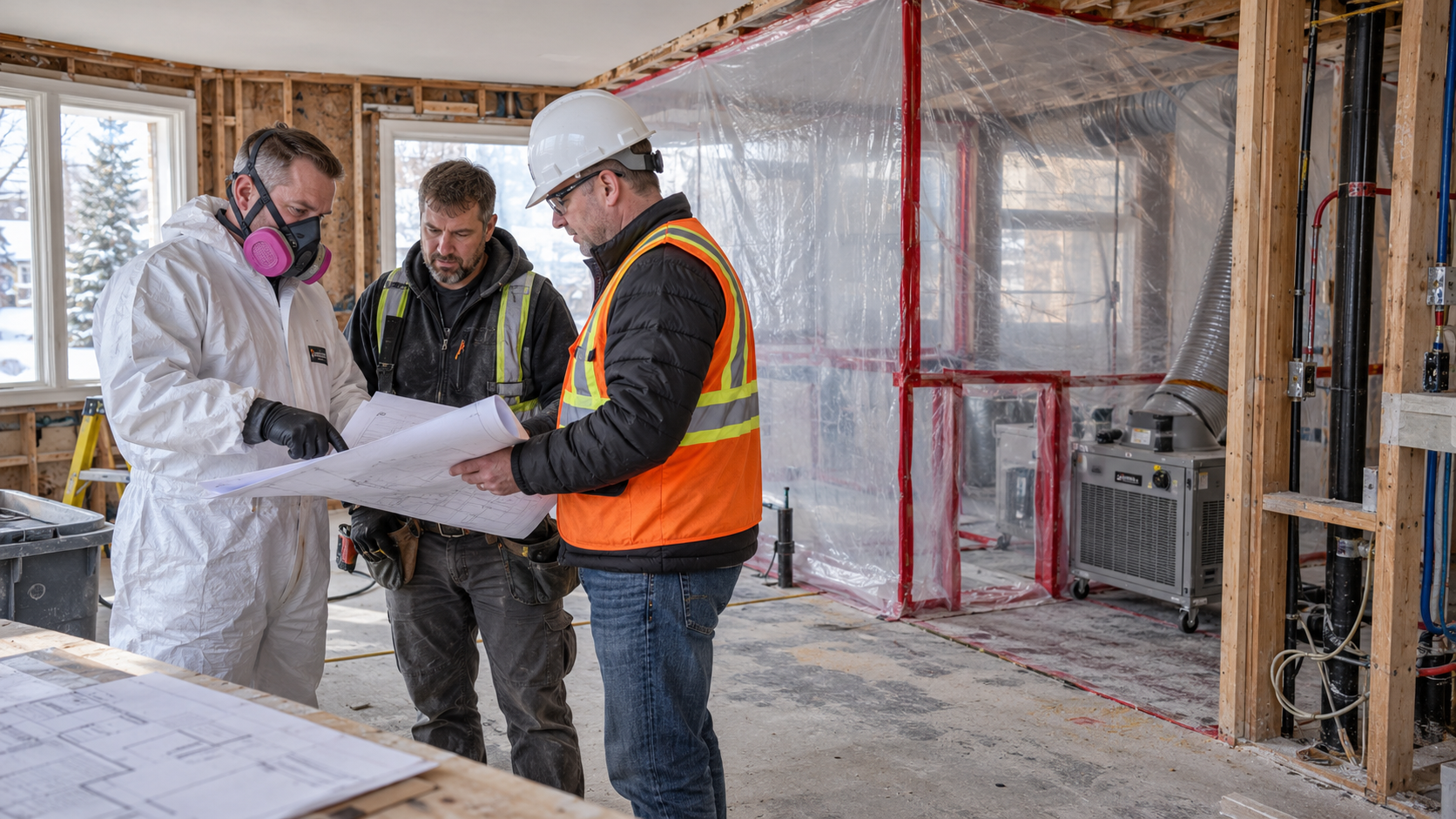
YYC Asbestos Removal & Renovation knows that choosing an asbestos abatement company is a decision that affects your health, your budget, and your timeline. The right crew makes the hazard disappear safely and quietly. The wrong one can spread fibres, cut corners on containment, or leave you without the paperwork you need later. A short checklist helps you tell them apart.
Hiring well is not about finding the flashiest website. It is about judging process, honesty, and follow-through. The sections below give you a simple framework for that judgement.
Start With a Trained Asbestos Abatement Company
The first question is simple: who does the work, and how are they trained? Asbestos removal is a controlled activity, not general labour.
A strong asbestos abatement company explains its process without hesitation. It describes how it seals the area, how it keeps fibres down, and how it confirms the space is clear afterward. Clear answers signal real experience.
Be cautious if a contractor is vague about containment or rushes past your questions. The companies worth hiring are proud to walk you through their method step by step.
Experience With Homes Like Yours
Training is the baseline, but relevant experience adds real value. A crew that regularly handles older Calgary homes knows where the surprises tend to hide.
Ask whether the company has worked on properties similar to yours in age and style. A contractor familiar with pre-1980s bungalows, for example, will anticipate the materials and layouts common in that era. That familiarity makes the job smoother and the quote more accurate.
What a Good Asbestos Abatement Company Puts in Writing
Promises made on a doorstep are easy to forget. A written scope of work protects both sides and sets clear expectations.
That scope should name the areas and materials being removed. It should describe the containment, the disposal plan, and the clearance testing that follows. When everything is written down, there is no room for a mid-job surprise.
Our abatement and removal service builds this detail into every project, so you know the full path before work begins. A written plan is also your best defence if a question ever comes up after the job.
Questions to Ask Before You Hire
A few direct questions reveal a great deal about any contractor. Use them in every conversation.
| Ask this | A strong answer sounds like |
|---|---|
| How will you contain the work area? | Sealed zones, negative air, controlled access |
| How is the waste disposed of? | Bagged, labelled, taken to an approved facility |
| Do you confirm the area is clear? | Clearance testing before anyone returns |
| Can I see the scope in writing? | A detailed, itemised document provided upfront |
| Are your workers trained for this? | Certified crew following Alberta procedures |
If an answer is fuzzy on any row, keep looking. For the standard these answers should reflect, Alberta publishes an asbestos abatement manual that sets out safe practice across the province.
Red Flags That Should Give You Pause
Just as good signs matter, a few warning signs should slow you down. They tend to appear early, if you listen for them.
Be wary of a contractor who downplays containment or says testing is unnecessary for a clearly older home. Watch for pressure to skip clearance to save time. These shortcuts trade your safety for someone else’s convenience.
A reluctance to put anything in writing is the clearest flag of all. A trustworthy asbestos abatement company welcomes a written scope, because it protects them as much as it protects you.
Why Clearance Testing Seals the Decision
Removal is visible, but safety is not. Clearance testing is how you know the work actually succeeded.
After removal, a clearance check confirms the space meets the standard before anyone returns. Without it, you are trusting that the job was done right rather than proving it. A reliable company treats clearance as a standard final step, never an upsell.
Pair clearance with disposal records and you have a complete, defensible file. That file matters when you sell the home, renew insurance, or simply want peace of mind.
Match the Company to the Job
Not every project is the same size. A single popcorn ceiling is different from a full pre-1980s home.
A good contractor scopes the work to your actual situation rather than selling a one-size package. If you are early in planning, our overview of what to expect during removal helps you frame the conversation and judge the answers you hear.
The right fit is a company that listens first and quotes second. When the scope matches your home and the process is clear, you can move ahead with real confidence.
What Happens After You Sign Off
The hiring decision is only the start. A good contractor keeps you informed through the work, not just before it.
Expect a clear schedule, a tidy containment setup, and regular updates as the job moves along. At the end, you should receive clearance results and disposal records without having to ask. That closing paperwork is the proof that the work met the standard.
Keep those documents with your home records. They are useful at resale, during insurance reviews, and any time a future project reopens the same space. A company that hands them over gladly is one that stands behind its work.
How Long the Process Takes
Timelines vary with the size of the job and the materials involved. A single ceiling moves quickly, while a whole-home scope takes longer to stage and clear.
A reliable contractor gives you a realistic window rather than a rushed promise. Clear communication about timing is one more sign that you have chosen the right crew for the job.
Frequently Asked Questions
What credentials should an asbestos abatement company have?
Look for trained and certified workers, proper safety procedures, and familiarity with Alberta rules. The company should explain its containment, removal, and clearance process in plain terms.
Should the same company test and remove asbestos?
Some owners prefer independent testing to avoid any conflict of interest, while others value one coordinated team. Either way, insist on lab-confirmed results and documented clearance after removal.
What should be included in a written scope of work?
A clear scope lists the areas and materials to be removed, the containment method, the disposal plan, and the clearance testing that confirms the space is safe. Vague scopes lead to disputes.
How do I know the job was done correctly?
Clearance testing after removal is the proof. Air or visual clearance, plus disposal documentation, shows the work met the standard before anyone returns to the space.
Talk to YYC Asbestos Removal & Renovation
When you are ready to compare your options, start with a company that answers every question clearly. Call YYC Asbestos Removal & Renovation at 403-390-5581 to discuss your project and request a written scope. We serve Calgary and surrounding Alberta communities, Monday through Saturday, from 8:00 am to 5:30 pm.