
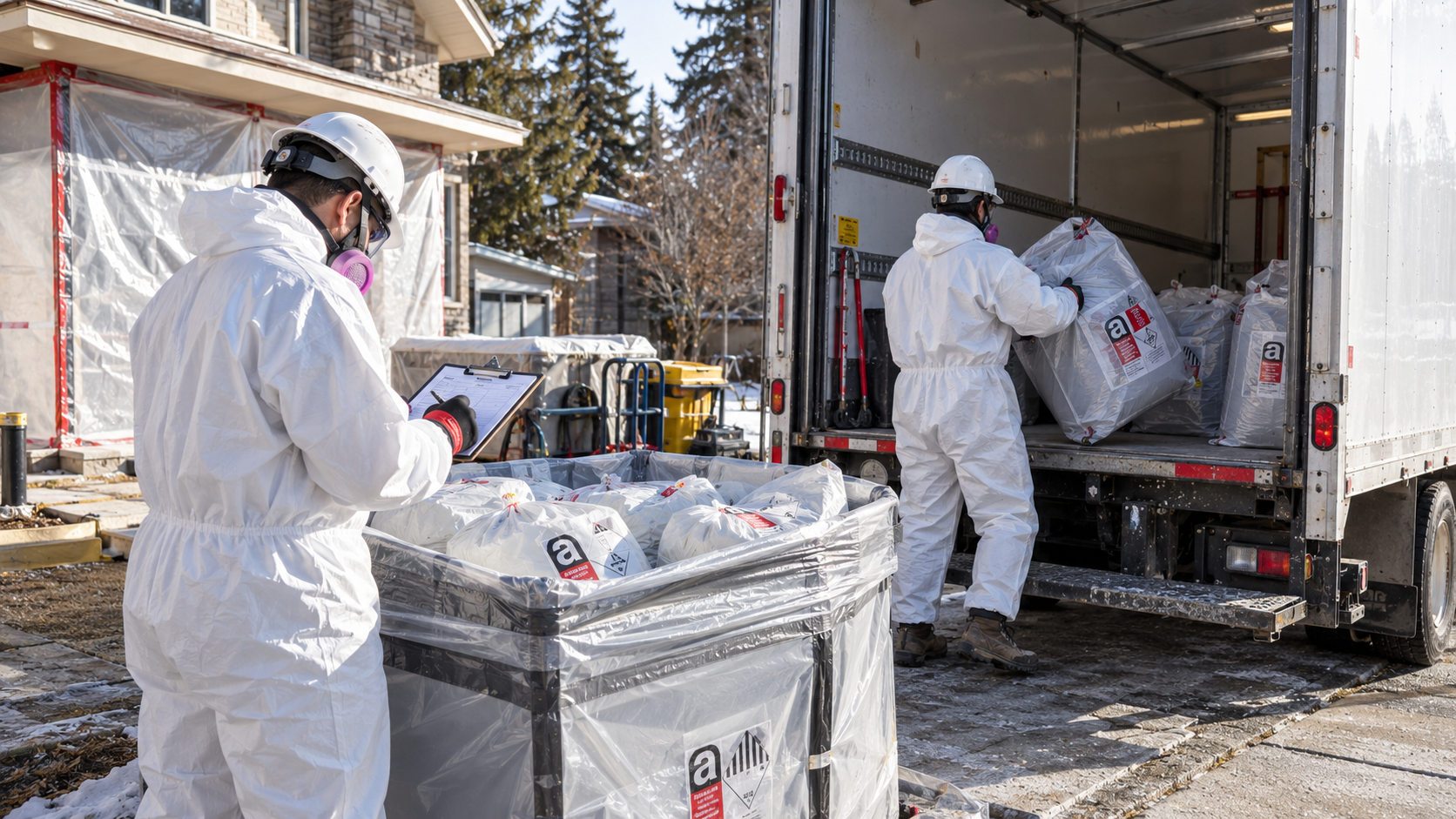
YYC Asbestos Removal & Renovation treats asbestos disposal in Calgary as a tracked, documented process rather than an afterthought. Once a material is removed, the work is only half done. The waste still has to leave your property safely, reach an approved facility, and be recorded along the way. That final chain protects your household, your neighbours, and your long-term liability.
Most homeowners spend their time thinking about the removal itself. The disposal step is quieter, yet it is where many of the real risks and legal duties sit. This guide explains how it works and what to expect.
Why Asbestos Needs Special Disposal in the First Place
Asbestos is dangerous because of what it does when it breaks apart. Intact material is often stable, but once it is cut or crushed, it releases microscopic fibres.
Those fibres are light enough to hang in the air for hours. Breathed in, they can lodge in the lungs and cause harm years later. That long delay is exactly why the material is treated so seriously at every stage, including disposal.
Ordinary garbage handling assumes waste is inert and safe to crush, compact, and bury loosely. Asbestos breaks that assumption. It needs a contained path from the wall to an approved site, with no compaction and no open handling along the way.
What Counts as Asbestos Waste
Asbestos waste is more than the sheets of board or tile that come off a wall. It includes the wrapping, the disposable suits, the filters, and the plastic sheeting used to contain the work.
Every one of those items can carry fibres. For that reason, they all follow the same disposal path. A crew does not sort "clean" plastic from "dirty" plastic once it has been inside a containment zone.
This is why a tidy-looking job still produces several sealed bags. The volume reflects careful containment, not waste for its own sake.
How Asbestos Disposal in Calgary Actually Works
The process follows a clear sequence that keeps fibres contained from start to finish. Each step has a purpose, and skipping one breaks the chain.
First, removed material is wetted to suppress dust. Next, it is double-bagged in heavy polyethylene and sealed. Then each bag is labelled as asbestos waste so no one mistakes it for ordinary debris.
From there, the sealed waste is transported to a facility approved to receive it. The load is logged, and you receive records that confirm where the material went. Our abatement and removal team manages this entire chain as part of the job.
Containment Comes First
Good disposal starts before anything is bagged. The crew seals the work area so fibres cannot drift into the rest of the home. Only then does material come down.
This order is what makes the later steps safe. A sealed zone means the waste is handled in a controlled space, not spread through living areas on the way out.
Why Proper Asbestos Disposal in Calgary Protects You
Homeowners sometimes focus only on the removal and forget the waste. That is a mistake, because disposal is where many problems start.
Dumped or mishandled asbestos can release fibres long after the renovation ends. It can also expose you to liability if the material is traced back to your property. Documented disposal closes that risk.
Good paperwork has a second benefit. When you sell the home or file an insurance claim, a clear record shows the hazard was handled the right way. For the provincial rules that shape this work, Alberta publishes an asbestos abatement manual that sets out safe handling expectations.
The Disposal Steps at a Glance
Each stage of disposal answers a simple question: is the material contained, labelled, and tracked? The table below shows how the steps line up.
| Step | What happens | Why it matters |
|---|---|---|
| Wetting | Material is dampened before handling | Keeps fibres from going airborne |
| Double bagging | Waste sealed in heavy poly bags | Prevents leaks during handling |
| Labelling | Each bag marked as asbestos waste | Stops accidental mixing with normal trash |
| Approved transport | Load taken to a licensed facility | Ensures legal, safe final disposal |
| Documentation | Receipts and manifests provided | Protects you for sales and insurance |
Why DIY Disposal Goes Wrong
It can be tempting to haul old material away yourself to save a step. In practice, this is where many well-meaning projects run into trouble.
Standard transfer sites will not accept asbestos in a regular load. The material needs the right bags, the right labels, and a facility set up to take it. Without those, you risk a rejected load and a bigger mess.
There is also a safety risk. Loose or torn bags in an open trailer can release fibres into the air you and your neighbours breathe. Proper asbestos disposal in Calgary exists precisely to prevent that.
What Homeowners Should Ask For
You do not need to manage the disposal yourself, but you should know what good service looks like. A few simple questions tell you a lot.
Ask who handles the waste and where it goes. Ask for the documentation that confirms the material reached an approved site. A contractor who answers these clearly is handling the final step with the same care as the removal.
If you are weighing your options, our guide on removal by a professional versus a DIY attempt explains why disposal alone is reason enough to hire a trained crew.
Keeping Your Household Safe on Disposal Day
The disposal stage is also the moment to think about who is home. Fibres are controlled, but a quiet, low-traffic site is always safer.
Plan for pets and children to be out of the immediate area while bags are moved and loaded. Keep the path from the work zone to the vehicle clear and short. These small steps reduce the chance of a bag snagging or tearing on the way out.
A good crew will manage all of this for you. Still, knowing the plan helps you ask the right questions and feel confident that the final step is handled with care.
Frequently Asked Questions
Can I put asbestos waste in my regular garbage?
No. Asbestos waste cannot go in household garbage or a standard bin. It must be sealed, labelled, and taken to a facility approved to accept it, which is part of a professional disposal process.
Who is responsible for disposing of asbestos after removal?
A qualified abatement contractor handles bagging, transport, and disposal as part of the job. You should receive documentation that the waste reached an approved facility.
Why does proper asbestos disposal matter for homeowners?
Improper disposal can expose family, neighbours, and workers to fibres, and it can create liability for the property owner. Documented disposal protects everyone and keeps your records clean.
Is the disposal paperwork important?
Yes. Waste manifests and receipts show the material was handled correctly. They are valuable for insurance, future sales, and any inspection of the property.
Talk to YYC Asbestos Removal & Renovation
If a renovation or removal is on your horizon, make disposal part of the plan from day one. Documented asbestos disposal in Calgary is a standard part of our service, not an extra you have to chase. Call YYC Asbestos Removal & Renovation at 403-390-5581 to discuss your project and how the waste will be handled. We serve Calgary and surrounding Alberta communities, Monday through Saturday, from 8:00 am to 5:30 pm.